Average Reviews:

(More customer reviews)I am not an architect, nor am I Japanese, but I have lived in Japan and love Japanese-style rooms. I picked this book up merely because I was interested in the topic, and thought I'd get just a dry description and maybe some floor plans. Was I wrong! This book is a delight, not merely for the content-- which is a thorough introduction to the pieces of the Japanese house and the 'why' behind them-- but also for the social comment the author makes about various facets of the lives of the people who live in these houses. Ueda's opinion comes through clearly, but that's what makes this book such a good read (his solution to the unslightly-futons-on-the-balcony problem had us in stitches, and his bad attitude toward flat roofs is a riot). He starts with the base of the house (the pillars) and works all the way out to the locks on the door. He's got a nice sense of history, and you can tell he himself is very fond of the traditional house. A delightful read!
Click Here to see more reviews about: The Inner Harmony of the Japanese House
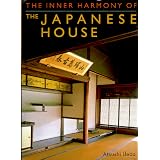
With the possible exception of the woodblock print, noother aspect of Japanese culture has been so widely embraced outsideJapan as the traditional Japanese home. Interior decorators,architects, and homeowners from the West have been borrowing fromJapanese architecture since Frank Lloyd Wright, yet the fundamentalsof the Japanese abode remain something of a mystery. What is theage-old sensibility behind it? Why do luminaries in the field hold itup as one of mankind's most successful blends of function, tradition,and nature?Atsushi Ueda ably answers these questions in Inner Harmony, whichbecame a bestseller in his native Japan and continues to be used inhigh schools and colleges throughout the country. Breaking down theliving space into its primary elements--shoji, partitions, pillars,garden, and so on--Ueda reveals the underlying patterns and hiddenharmony that took centuries to evolve: he discusses the ways in whichshoji exploit the natural light to create a subdued radiance; the waydecorated sliding doors and moveable partitions define one's sense ofliving space; and the function of a miniature garden as viewed frominside the house as well as out.In the manner of John McPhee and Tracy Kidder, Professor Ueda unravelsthe concealed concepts at work in the Japanese living space, andbrings compelling insights and a long-needed clarity to thesubject--all in the best tradition of contemporary literarynonfiction.
 Get 27% OFF
Click here for more information about The Inner Harmony of the Japanese House

0 comments:
Post a Comment