Average Reviews:

(More customer reviews)I bought Hugh Foster's "Biscuit Joiner Handbook" at a firesale at the local bookshop and read it from start to end. Foster's book is about the biscuit joiner as a machine, how it operates, and outlines the different kinds of joints one can create.
Next, I bought Jim Stack's book and I was pleased because it has lots of project examples that showed me where and how, in many different types of wooden furniture construction, I could apply biscuit joinery. This is the kind of information Hugh Foster's book does not have. As a result, I was able to pick up a Furniture & Cabinetmaking magazine, look at a project for a blanket chest that had 20+ mortise and tenon joints, and figure out how to replace those joints with biscuit joints!
The other benefits from the book were the good, sharp photographs; Hugh Foster's book has black and white photographs that are murky and indistinct and I had trouble distinguishing the workbench, the wood and the tool in lots of the photos
I did not give Jim Stack's book higher stars because there are a few subediting mistakes (e.g. wrong project and steps used in cross references - its annoying to be directed to project "x" to see how to do something when project "x" does not show this), I think it lacks an end-to-end example of how to make a panel door using biscuits and the (to me) dangerous examples of the use of circular saws (no riving attachment, no cover over the blade, fingers awfully close to the moving blade) and the jointer (fingers too close to the moving blades). I would have found the last acceptable if there had been a notice at the front saying the riving attachment and cover had been removed temporarily to make the pictures clearer.
Lastly, a suggestion for the next edition. Please add in the warning that the biscuit joiner must be up to full speed before the plunging is done in order to prevent kickback and cutting your hand - there is a nasty accident detailed on the Internet somewhere (Mick's Woodworking Tools page???) that was caused by the person plunging before the machine was at full speed.
Summary: complements Hugh Foster's Biscuit Joiner book really well, buy it for the examples of when and how to use, be aware of the dangerous circular saw and jointer photos.
Click Here to see more reviews about: The Biscuit Joiner Project Book: Tips & Techniques to Simplify Your Woodworking Using This Great Tool
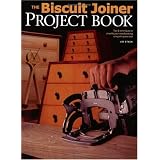
The biscuit joiner has revolutionized woodworking by enabling woodworkers to create joints that are incredibly strong, durable and fast to make. The Biscuit Joiner Project Book provides woodworkers, hobbyists and furniture makers with a variety of projects that will help them develop more efficient joinery techniques while creating wonderful new pieces of furniture for their home.There are 12 projects in all, including a bookcase, a nightstand, a chest of drawers and an entertainment center. Each piece can be made quickly and effectively using a biscuit joiner to make joints that are as strong, if not stronger, than those made using traditional joinery techniques!


0 comments:
Post a Comment