Average Reviews:

(More customer reviews)David Bach is very much a traditional investment adviser. He believes that over the long haul one can make a fair amount of money by saving and holding on to your investments. In this book, he makes a strong case that, by buying homes to live in, buying up, and obtaining rental properties, you can do very well for yourself. Ultimately, you can become a millionaire.
Still, had you followed Bach's advice in 2005, when this book was written, you would likely be deeply in debt now with no chance to even refinance and take advantage of lower rates. That is because the real estate market was in serious straits in 2005 and Bach, despite his reservations about 0 down mortgages (30% of the market the previous year) and interest only loans (a similar percentage) was overly optimistic about real estate. As an investment, it had "never" experienced a year over year decline, he noted, citing national figures. (Nothing like 4 consecutive contrary years to suggest a problem with the initial stat!) Sure, if you are able to hold on through the current economic crisis, then in a decade or so, you will come out ahead, but in the meantime, it would help if your investment advisor could tell the difference between cycles in real estate and a bubble brought on by irresponsible government policies and banks that were more than eager to accommodate them. Indeed, Bach suggests that one of the reasons real estate will continue to go up is because subprime mortgages are so common now (2005). Talk about a serious misreading of the market!
But once you get past the hype, a fair amount of the advice in this book is valuable. Bach does give good suggestions for saving up a down payment, finding a good mortgage and a good real estate agent. The book is strong on negotiating favorable mortgage terms, weaker on negotiating a good closing price on the house you decide to buy. And he also is helpful when it comes to assessing the various purchase options you will face.
But even in this more reasonable part of the book, Bach is somewhat superficial when it comes to explaining how you can profit from homeownership. He correctly notes, for example, that you can deduct the interest you pay from your taxes. But he does not note that to do this you will need to itemize instead of taking a standard deduction. You will almost certainly come out ahead, but it should be noted that in foregoing the standard deduction you are, in effect, not getting to write off your full interest payment. Similarly, his description of real estate profits is a little superficial. Let us suppose, he suggests, that you buy a house for 200,000 with 40,000 down. If it appreciates 10%, to $220,000, you can sell the house for a "50%" profit minus your payments. But realistically, your payments will eat up most of the profit. Real estate historically appreciates at 6% per year. So figure about 20 months to get your 10% appreciation. Now, you have paid 20 months of payments, which at 5.5% comes to $1,134 a month. You have already spent the full appreciation (and then some) in payments, with only minimal progress on your principal. And you still owe your agent her commission.
So the question comes up, should you buy a house at all? The best answer is "maybe." If you are going to do so, now (2009) is probably a good time, if for no other reason than you face considerably less downside risk than you did in 2005 and the Obama administration is going to kick in a "free" $8,000 tax credit. Since you can expect other expenses to rise over the next few years, I strongly recommend getting what you can. But remember, rent buys you more than just a place to stay. It buys freedom to move at the drop of a hat which is something home owners definitely do not have, especially in this economy. So in the final analysis, don't expect homeownership to make you an automatic millionaire. But it may provide some security, especially if you lack the discipline to systematically save in other ways.
The bottom line, use this book to help you purchase a first home, IF that is what you want. But take the investment advice that is scattered throughout the book with a certain degree of skepticism. It is not so much "wrong" as it is incomplete, and the years since 2005 have highlighted the weaknesses of these arguments.
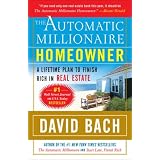
Click Here to see more reviews about: The Automatic Millionaire Homeowner: A Lifetime Plan to Finish Rich in Real Estate
David Bach’s Simple System for Building Wealth Through Homeownership Will Help You Finish Rich in Any Market—Automatically
Updated with a new chapter of success stories
Owning a home has always been the American Dream, and in The Automatic Millionaire Homeowner, David Bach shows that buying a home and investment properties is not only possible, it is still the surest way to reach your seven-figure dreams on an ordinary income. Whether you are a renter or already own a home, Bach’s book offers a lifelong strategy for real estate based on timeless wisdom that is tried and true—in any market. He includes everything you need to know, with step-by-step instructions, including phone numbers and web sites, so you can get started right away. As long as you’re alive, you have to live somewhere. Why not let where you live make you financially secure and ultimately rich? David Bach will show you how.
 Get 22% OFF

0 comments:
Post a Comment