Average Reviews:

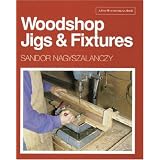
(More customer reviews)The photos in this book are all Black-and white. While not as flashy as some modern tomes on the subject, black-and-white photos reduce publishing cost and are perfectly suited to showing how these jigs work. Also, there are many black-and-white line-drawings, (Hand-drawn illustrations).
Illustrations are often much better than photographs, because they can show the inside of a part as if it were invisible. You can "see-through" an object to understand its function. These high-quality illustrations are made by professional illustrators who obviously understand the operation of the mechanisms. Taunton should be lauded for maintaining their high standards and using these talented illustrators. Also, the print is not too small for old eyes... that's smart and "user-friendly."
As always, the Taunton editing style is present: concise, casual, efficient use of good modern English makes the reading easy and understanding clear.
From my personal viewpoint, the "resources" index (starting on page # 224) is worth the price of the book. I already know about most of the jig & fixtures in the book and have used something like every one of them at one time or another. But when designing your own jigs, replacing old ones or building those in this book, the BIGGEST hassle is FINDING THE MATERIALS.
Where do you buy UMHW plastic in strips?
Where can I find that nifty semi-circular fence-stop and what the heck is it called? (it's called a "curved lid support.") Many times, just knowing the NAME of a product will help us find that thing, especially in today's internet-driven world.
The "product-specific" resource pages, ( 224 to 227) are the biggest time saver. Alloyed to that "product specific" concept are the clear "call-outs" on each illustration. Each illustration "calls-out" the proper name of the components, then you can find that thing by its name in the resource-guide. Anyone who has ever seen an architectural drawing, engineering blueprint or just good project-plans will immediately recognize the proper draftsman-style labeling. They show the correct name for each critical part, particularly if that part is arcane or hard-to-find. Great!
The organization of the book is useful too...
Sections and chapters are categorized by FUNCTION and RELATED FUNCTIONS; i.e. "Fences that guide" or "Stops to limit travel". There is a separate section for "materials" (the stuff you make jigs with) and "hardware" (the stuff that holds other stuff together and makes it work.) That's smart. It takes an otherwise dreary process and makes it easy-to-find what I need FAST!
This is the second book I have purchased from "booklady" and I have to say the service is good. The package arrived ahead of schedule, which means it was in stock and shipped immediately. I got e-mail confirmation of the shipment. The book was as described and packaged well enough to withstand the abuse it obviously endured from the postal service. Booklady will get more of my business whenever possible.
I could find some niggling peeves about this ( and other Taunton books)...
The material is re-hashed... and the editors know it. There isn't much that is truly "new" in woodworking, either in methods, machines or jigs. Much of the material herein is old-news to old guys like me. Indeed, much of it is recycled from old FW articles... but that's not too offensive in this case because of the good organization.
Some other Taunton publications are NOT so well organized. They sometimes focus on making their books "pretty," which is not a crime, but it does add to the cost. Making appearance the priority might help sell books to the uninitiated, but it makes it harder to deliver meaningful informative content. The "new" Taunton is too worried about maintaining its premier status amongst woodworking publications and expanding their publishing dominance. That's why they have expanded and divided into other related "craft", "construction" and "living" areas, instead of focusing on what they originally did best... Fine Woodworking techniques and design.
Because my father was a subscriber from its inception, I witnessed the rise of Taunton publications and its de-evolution into a haughty, somewhat snobbish "lifestyle" rag. And ALL the Taunton publications are now too focused on promoting advertised products, rather than delivering well-organized information.
The new Taunton is only "organized" in the sense that it is compartmentalized. They make articles, books and (now online) videos about minutia, separating each individual subject into as many sub-categories as possible in their never-ending quest for profitable content. Ninety-five percent of everything we see at FineWoodworking.com and in the magazine was covered well in the Tage Frid Teaches Woodworking series decades ago. This book suffers from that same "soft-sell" profit-driven undercurrent, though not nearly as much as others.
The "resources" are valuable, but I notice that they only list "resources" that advertise with FW magazine. OK... go ahead and list your check-writing advertisers first, but Taunton should also list other sources. Help some of those little specialty shops that can't afford to advertise (now) so they can grow big enough to one-day spend ad-bucks at FW. And all publishers should remember that a little competition amongst their "resources" reduces prices for all woodworkers and encourages better service too. Fair competition promotes better goods and services, helps stabilize economic downturns and ultimately will net them MORE advertising revenue. If they are hip enough to publish articles and manufacture whole magazine concepts on "green" architecture, "Fine" living, funky-cheap recycling crafts, (Threads, junk market style, and "crap-market-style") then they should realize that helping the little guy, ultimately helps us all.
Summary... If you are new to woodworking and want to get the most from your shop-machines, this is a great book to read and study. Even an old-pro can save time using it as a resource and a handy reference for shop-drawings. This book is valuable to own, even if you already literally know, "every trick in the book." I will keep it near-by and dust-free so I can refer to it often. It is one of Taunton's better books.
Click Here to see more reviews about: Woodshop Jigs & Fixtures (A Fine Woodworking Book)

Click here for more information about Woodshop Jigs & Fixtures (A Fine Woodworking Book)

0 comments:
Post a Comment