Average Reviews:

(More customer reviews)This book is one of the best I have seen for describing in detail the challenges of creating one of America's architectural landmarks. Anyone who reads this book will be reminded of Thomas Edison's comment about genius being 99 percent perspiration and 1 percent inspiration.
Fallingwater came as a commission after one of the longest dry spells of Frank Lloyd Wright's career. Despite having no work to do, no money, and few prospects, Mr. Wright dawdled with the project while trying to sell his client, Edgar Kaufmann, as many other projects as possible. Contemporary accounts suggest that Wright only began sketching something on paper when Mr. Kaufmann was about to arrive at Taliesin in Wisconsin, where Wright did his work.
Mr. Kaufman was not an easy client. He was the head of a major department store, and was used to getting his own way. Client and architect often clashed, with bent feelings on both sides. Independent "experts" got involved who also added to the controversy, mistakes, and misunderstandings. Mr. Kaufmann deserves credit, though, for sticking with Wright as the costs soared way above the original budget for this most unique house.
Interestingly, the two were brought together by Mr. Kaufmann's son who had come to study with Wright in Taliesin. The book contains a brief introduction by Edgar Kaufmann, Jr. who ultimately gave the home to a local nature conservancy.
Even without the challenges of the human relationships, Fallingwater was a most ambitious commission. In a remote part of the Allegheny Mountains in Pennsylvania, Fallingwater is sited on top of a waterfall. The potential for the water to undermine the house is enormous. Mr. Wright also wanted to keep as many of the original rocks and trees as possible. The site survey was often wrong, and the designs had to be adjusted to reflect the reality. The design also provided other unusual problems, and the first cantilever was built incorrectly due to changes made under Mr. Kaufmann's direction.
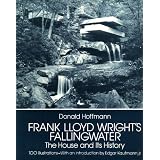
The book contains a wealth of maps, letters, summaries of interviews with those who worked on the project, drawings, plans, and photographs of the work in progress in black and white. This detail brings the challenges to life in a very real way.
The fascinating part of this book to me is that Fallingwater's final effects are the opposite of its creation. The home seems to float above the water, like a mirage. It seems to exude tranquility and peace. Yet, its every stage of movement toward becoming a reality was like a Sumo wrestling match with enormous heavyweight egos and ideas colliding at high speed and with little regard for the impact on the other fellow.
As much as I love Fallingwater, I love understanding more about how it was created even more. Anyone who wants to leave a mark of greatness behind should read this book.
After you finish thinking through the implications of Mr. Wright's vision and ways of implementing it, I suggest that you think about your own personal life and work. Where are you lacking in vision? Where are you lacking in the processes to implement worthwhile visions?
Turn your dreams into beautiful realities . . . for everyone!
Click Here to see more reviews about: Frank Lloyd Wright's Falling Water: The House and Its History
A total revision—both in text and illustrations—of the standard document on Fallingwater, the boldest, most personal architectural statement of Wright’s mature years. Updated with valuable new material from the recently opened Frank Lloyd Wright Archives, the book gives special emphasis to Fallingwater’s architectural innovations: cantilevered construction, ingenious integration with a majestic waterfall, use of reinforced concrete, and more. Over 100 photos depict the site, every phase of construction and the distinctive interior and exterior detailing. "Fascinating"—The New York Times. 116 illustrations.--This text refers to an alternate Paperback edition.

Click here for more information about Frank Lloyd Wright's Falling Water: The House and Its History

0 comments:
Post a Comment